Learn how to shift from self-blame to emotional bravery through self-compassion and radical self-forgiveness, backed by science and research.
Healing truly begins when we shift from blame to bravery. This means letting go of the habit of criticizing ourselves for past mistakes and instead choosing courage, personal responsibility, and self-compassion. It’s about stepping into the role of your own ally rather than your harshest critic.
Science shows that self-compassion not only improves emotional resilience but also rewires the brain for healthier responses to failure and setbacks. In this article, we’ll explore how to move away from self-punishment, embrace emotional bravery, and practice radical self-forgiveness to reclaim your self-worth.
Personal Responsibility vs. Self-Punishment
When we’ve made mistakes, it’s easy to slip into self-punishment—the inner voice that says, “I’m not good enough” or “I’ll never get this right.”
But personal responsibility is different. It’s about recognizing what happened, making amends where possible, and committing to doing better—without tearing yourself down.
📊 Research Insight: A 2012 study in the Journal of Personality and Social Psychology found that people who practiced self-compassion recovered emotionally faster from failure compared to those who engaged in self-criticism.
How to practice personal responsibility instead of punishment:
- Acknowledge the mistake — “I did something I regret.”
- Own it without shame — “This action doesn’t define me.”
- Plan your next step — “Here’s how I’ll improve.”
This approach creates space for growth instead of deepening emotional wounds.
Inner Strength in Surrendering Judgment
Surrendering judgment doesn’t mean ignoring mistakes—it means releasing the constant self-attack that keeps us stuck.
Dr. Kristin Neff, a pioneer in self-compassion research, explains that meeting ourselves with kindness rather than judgment builds emotional resilience and reduces stress (Neff, 2003).
Why letting go of judgment builds strength:
- Less anxiety and shame → You create a safer inner environment.
- Better motivation → Encouragement fuels change more than criticism.
- Healthier self-worth → You believe you deserve care even when imperfect.
💡 Try this: Imagine speaking to yourself the way you would to a dear friend in the same situation. Notice the shift in how your body feels.
Examples of Emotional Bravery
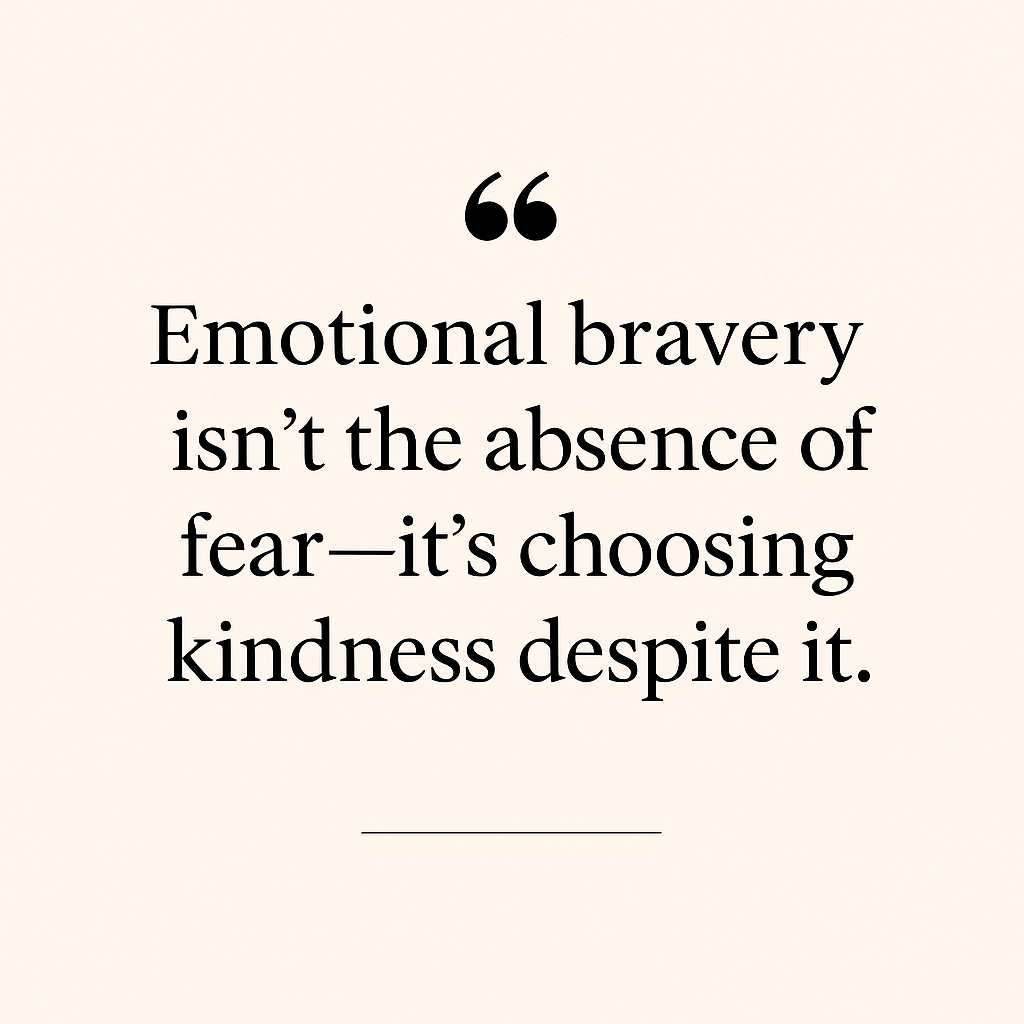
Emotional bravery isn’t about never feeling afraid—it’s about acting with courage in the presence of fear.
Examples in everyday life:
- Admitting vulnerability: A student who fails a test says, “I need help,” and seeks tutoring instead of hiding their struggle.
- Setting boundaries: A people-pleaser learns to say “No” when they’re overwhelmed, honoring their mental health.
- Forgiving oneself: A parent who loses patience with their child chooses to apologize and approach tomorrow with mindfulness rather than guilt.
📚 Research Link: Studies show that self-compassion supports emotional bravery and is linked to lower depression, greater life satisfaction, and stronger relationships (Zessin et al., 2015).
Turning Forgiveness Inward & Cultivating Self-Worth
Self-compassion, according to Dr. Neff, has three key components:
- Self-kindness instead of self-judgment
- Common humanity instead of isolation
- Mindfulness instead of over-identification with mistakes
Radical self-forgiveness takes this further—it’s a conscious choice to release shame and guilt even for significant past mistakes.
Steps to practice radical self-forgiveness:
- Name the pain — Write it down clearly.
- Recognize common humanity — Remind yourself mistakes are part of being human.
- Offer forgiveness — Say out loud, “I forgive myself.”
- Take a compassionate action — Go for a walk, meditate, or connect with someone supportive.
This process strengthens self-worth by showing yourself you are more than your mistakes.
Today, choose one area where you’ve been blaming yourself.
- Replace self-punishment with responsibility.
- Surrender judgment and speak kindly to yourself.
- Take one small act of emotional bravery—whether it’s setting a boundary, apologizing, or letting go of an old regret.
💬 Share this journey with someone who will cheer you on. Healing is powerful, but even more so when we walk it together.
Frequently Asked Questions
1. How is self-compassion different from self-pity?
Self-compassion involves caring for yourself with understanding, while self-pity keeps you stuck in the story of suffering without seeking solutions.
2. Can self-punishment motivate change?
Research shows self-punishment often leads to more stress and less resilience, while self-compassion increases motivation and problem-solving.
3. Is emotional bravery the same as confidence?
Not necessarily. Confidence is belief in your ability; emotional bravery is acting with courage even when confidence is low.
4. How long does it take to forgive yourself?
It varies by person and situation—it may take moments or months. Self-forgiveness is a practice, not a one-time event.
5. Where can I learn more?
Visit self-compassion.org for guided practices and research by Dr. Kristin Neff.